All stories · Case study
ChatGPT ads: one product went from 27 to 90 conversions a week
Share: WhatsApp · Telegram · X · Facebook · LinkedIn · Email
Written by AI from 1 public posts Reviewed by Chris Koh
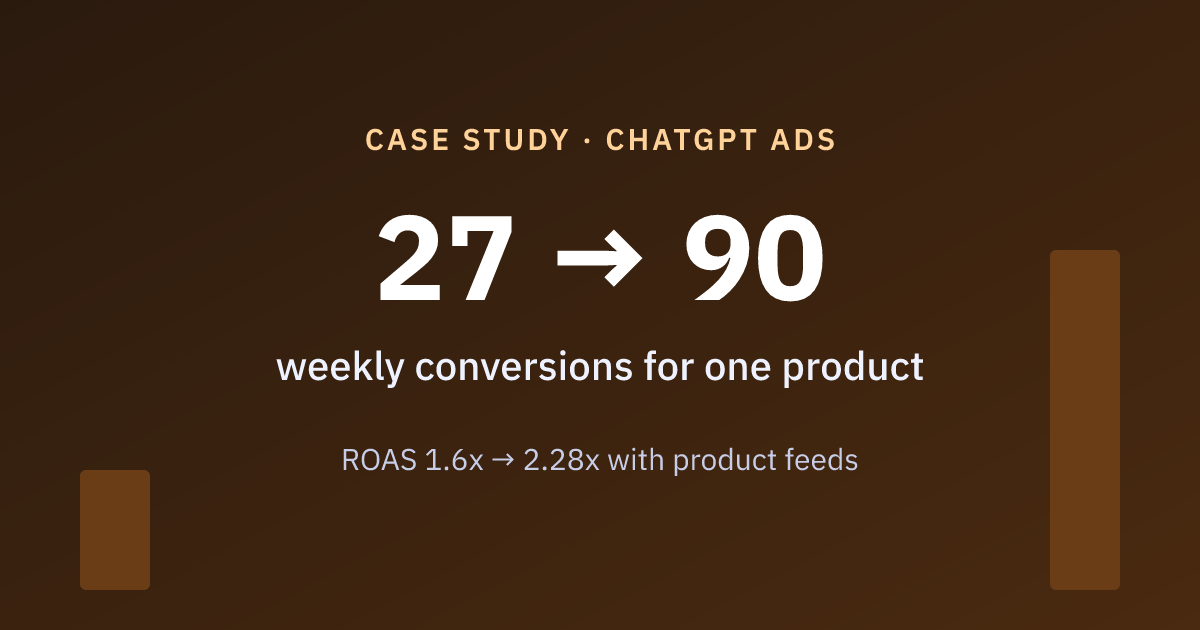
One product went from 27 to 90 conversions a week after its brand turned on ChatGPT ads, according to Jackson Blackledge (@blvckledge), who has been testing the ads for ecommerce clients and shared early findings on X in September 2026.
been testing chatgpt ads for some clients
still early but the results have been much better than i expected
some of our findings:
1. chatgpt ads are looking strong for top of funnel. ROAS tends to be much higher on first-click attribution than on last-click.
2. there’s a strong correlation between chatgpt ads and higher sales on other channels. one product jumped from 27 to 90 conversions a week after we turned…
The clients are not named, and Blackledge calls these early insights that might change over time.
Before
The post gives two starting points:
- One product: 27 conversions a week before ChatGPT ads were switched on.
- Standard ChatGPT ad campaigns in one account: 1.6x ROAS.
It does not give spend, CPC or revenue figures.
What they changed
- Used ChatGPT ads for top of funnel. Blackledge says ROAS looks much higher on first-click attribution than on last-click.
- Ran product feed campaigns next to standard ones. Feed campaigns often delivered better ROAS, though they were hard to scale.
- Bid on clicks instead of reach. Reach campaigns produced very high CPMs and CPCs.
- Started CPCs well below the suggested bids. The team used its Google Shopping CPCs as the benchmark.
- Picked products that already sell on Google Shopping. Those products tended to do better on ChatGPT ads as well.
- Wrote calm, specific copy. The ad appears after the organic answer, so the user has already read a detailed reply, and aggressive or clickbait copy did not work.
After
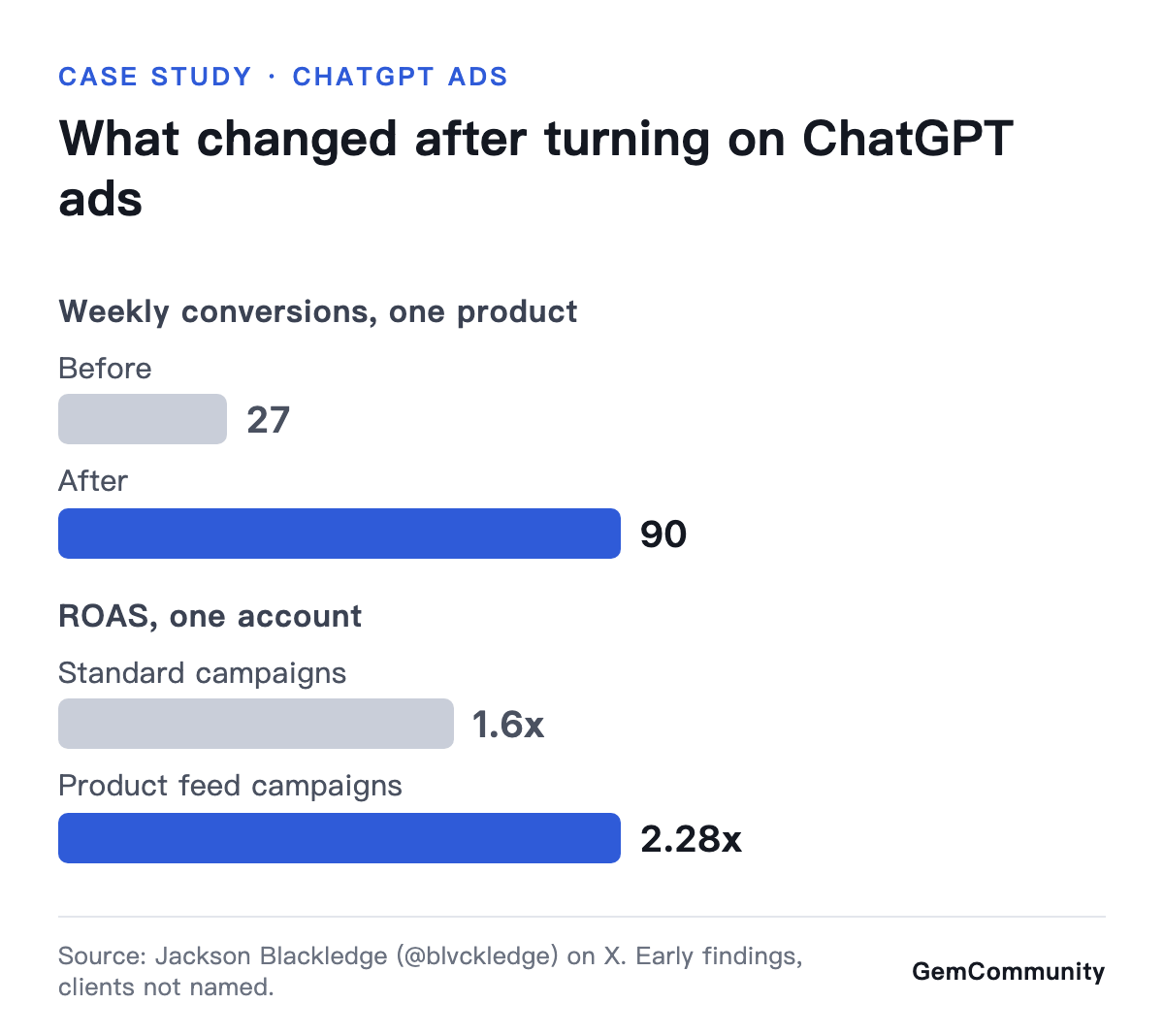
| Metric | Before or standard | After or product feed |
|---|---|---|
| Weekly conversions, one product | 27 | 90 |
| ROAS, one account | 1.6x (standard campaigns) | 2.28x (product feed campaigns) |
Blackledge reports a strong correlation between ChatGPT ads and higher sales on other channels, which is where part of the 27 to 90 jump showed up. That makes it a correlation, and the post does not isolate the ads' own effect.
How can you test this on your store?
- Start with products that already sell well on Google Shopping.
- Bid on clicks and set CPCs from your Google Shopping numbers, below the suggested bids.
- Run one product feed campaign next to one standard campaign and compare ROAS.
- Track first-click and last-click ROAS together, plus total weekly sales of the advertised products across all channels.
- Write copy that adds something to the answer the user just read, and skip hype.
Frequently asked questions
Where does a ChatGPT ad appear?
After the organic answer, according to Blackledge. By then the user has read a detailed reply, which is why aggressive copy did not work in these tests.
Why do the results depend on attribution?
Blackledge says ROAS looks much higher on first-click than on last-click, and that the ads correlated with higher sales on other channels. Judging the ads on last-click alone would likely undercount them.
What is the biggest limitation right now?
Reporting. Blackledge says there is little data on search terms and audience demographics.
Sources
- Jackson Blackledge (@blvckledge) on X: https://x.com/blvckledge/status/2102020208915529997